● #1 Platform for Company Registration

Create New

Private Limited Company Registration

Kickstart your entrepreneurial journey with India's most popular business structure. Get instant name approval, limited liability protection, and expert support for hassle-free incorporation.

Private Limited Company Registration

LLP Registration

Private Limited Company Registration

Fill in the details to get registered

Get Your Private Limited Company Registration

Complete the form below to initiate your registration.

Authorized Person Details
Proposed Company Names
Registered Office Address

SSL Secured & Confidential

Private Limited Company Structure
OVERVIEW

What is a Private Limited Company Registration?

A Private Limited Company Registration (Pvt Ltd) is one of the most popular legal structures for businesses in India. It is governed by the Companies Act, 2013, and is ideal for anyone looking to build a scalable business, raise funding, and offer limited liability protection to its shareholders.
Recognized by investors, banks, and government bodies, a Pvt Ltd company allows you to separate your personal assets from your business liabilities. It creates a separate legal identity, ensuring perpetual succession and ease of transferability.

Role in the Indian Startup Ecosystem

Private Limited Companies play a pivotal role in India’s startup ecosystem. Recognized as the preferred business structure by investors, venture capitalists, and government bodies, they provide a robust foundation for innovation-driven enterprises. With clear compliance standards, scalable ownership structures, and ease of fund-raising, Pvt Ltd companies have enabled thousands of Indian startups to grow, secure funding, and participate in flagship schemes like Startup India and Make in India.

Suitability for SMEs and Growing Startups

The Private Limited Company Registration model is particularly suited for small and medium enterprises (SMEs) and startups aiming for long-term growth. It offers the right balance of credibility, operational flexibility, and legal protection. Features like limited liability, separate legal identity, and the ability to attract investors make it ideal for businesses planning to expand, hire skilled talent, or seek bank loans and venture capital. It’s a future-ready format for ambitious entrepreneurs.

Eligibility & Non-Eligibility for Pvt Ltd Company Registration

Who is Eligible

To register a Private Limited Company Registration in India, the following criteria must be met:

  • Minimum Two Directors: At least two directors are required, one of whom must be an Indian resident (i.e., stayed in India for at least 182 days in the previous calendar year).
  • Minimum Two Shareholders: A Private Limited Company Registration must have at least two shareholders. Directors can also be shareholders.
  • Unique Company Name: The proposed name must not be identical or similar to any existing company or trademark.
  • Registered Office Address: A valid Indian address must be provided as the official address of the company for correspondence.
  • Capital Requirement: There is no minimum paid-up capital requirement, but the capital structure must be declared at the time of incorporation.
  • Business Objective: The company must clearly state a lawful business objective in its Memorandum of Association (MoA).

Who is Not Eligible

Certain individuals or entities are restricted from registering:

  • Minor Applicants: Individuals below 18 years of age cannot become directors or shareholders.
  • Undischarged InsolventsPersons who have not been discharged from insolvency are ineligible.
  • Persons Convicted PersonsAnyone convicted of an offence involving moral turpitude or sentenced to imprisonment for more than six months is not eligible, unless a period of five years has elapsed since the expiry of the sentence.
  • Foreign Nationals Without Valid Documents:Foreign nationals can be directors or shareholders but must possess valid documents such as passports, and in some cases, a valid business visa.
  • Entities with Similar NamesProposed companies with names closely resembling existing registered entities or trademarks may be rejected.

Compare Business Types

Choose the structure that fits your vision.

Feature Private Limited
(Pvt Ltd)
One Person Company (OPC) Sole Proprietorship
Ownership Directors (Min 2, Max 200) Single Director (Owner) Single Individual
Legal Status Separate Legal Entity Separate Legal Entity Not a Separate Legal Entity
Liability on Person Limited To The Amount Invested Limited To The Amount Invested Unlimited Personal Liability
Formation Under Companies Act, 2013 Companies Act, 2013 Local Business Licenses (if needed)
Minimum Directors At Least 2 Directors 1 Director (The Owner) Not Applicable
Taxation Corporate Tax Rates Corporate Tax Rates Individual Income Tax Rates
Compliance Requirements High (Annual Returns, Financials) Moderate (Annual Returns, Financials) Low (Basic Bookkeeping)
Governance Structure Managed By Directors Managed By Sole Director Managed By Sole Owner
Ease of Raising Funds High (VCs, Seed Funding, Equity) Limited Options Very Limited (Personal Funds/Loans)
Transferability of Ownership Shares Transferable (with restrictions) Not Transferable Not Applicable
Perpetual Succession Yes Yes No (Depends on owner)
Ease of Setup Moderate to Difficult Moderate Easy and Inexpensive
Name Suffix Must Include "Private Limited" Must Include "OPC Private Limited" No Suffix Required
Regulatory Authority Ministry of Corporate Affairs (MCA) Ministry of Corporate Affairs (MCA) Local Authorities
Profit Distribution As Per Shareholding Ratio Sole Owner Gets All Profits Sole Owner Gets All Profits
Foreign Ownership Allowed With FDI Guidelines Allowed With FDI Guidelines Not Allowed
Annual Filings Mandatory Mandatory Not Mandatory (May need local filings)
Statutory Meetings Required (Board/AGM) Not Required Not Applicable

Why Register a Private Limited Company Registration?

Unlock growth, funding, and credibility.

Limited Liability

Shareholders' personal assets are protected. In case of debt or losses, your personal savings remain safe.

Easy Fundraising

Pvt Ltd companies are preferred by Venture Capitalists and Angel Investors.

Separate Legal Entity

The company has its own legal identity separate from owners.

Credibility

Registered companies are trusted more by vendors and customers.

Perpetual Succession

Company continues despite change in shareholders or directors.

Global Reach

Easier to attract FDI and expand globally.

Step-by-Step Registration Process

A clear roadmap to register your organization — follow these steps to incorporate, complete statutory registrations, and get legally ready to operate.

1
Digital Signature Certificate (DSC)

Begin by obtaining a Digital Signature Certificate (DSC) for proposed directors and authorised signatories. A DSC is required to sign electronic documents submitted to regulatory portals (for example MCA) and ensures secure, legally valid digital communication.

2
Director Identification Number (DIN)

Each director should have a Director Identification Number (DIN). DIN can be applied via the SPICe+ form during incorporation or obtained separately using DIR-3 if required beforehand.

3
Company Name Reservation (RUN Form)

Reserve a unique company name using the RUN (Reserve Unique Name) service on the MCA portal. Ensure the name complies with MCA/trademark guidelines.

4
Filing SPICe+ (Part A & B)

File SPICe+ to incorporate the company:
Part A – name reservation;
Part B – incorporation details and statutory registrations.

5
PAN, TAN & EPFO/ESIC Registration

Apply for PAN, TAN, EPFO and ESIC registrations using SPICe+ or linked forms.

6
Certificate of Incorporation from MCA

Registrar of Companies issues the Certificate of Incorporation containing the CIN, confirming legal existence.

Next Steps

Once incorporated, proceed to obtain TP / TC registrations on SIDH, complete SSC/NSDC authorisations, and prepare infrastructure and documents to start training delivery.

Documents Required

For Directors & Shareholders — Indian Nationals
  • PAN Card (Mandatory)
  • ID Proof — Aadhaar / Voter ID / Driving Licence / Passport
  • Passport-size Photograph
  • Mobile Number & Email ID
  • Latest Bank Statement / Utility Bill (as address proof, if requested)
For Directors & Shareholders — Foreign Nationals
  • Passport (notarised and apostilled where applicable)
  • Address Proof — Utility Bill / Bank Statement / Driving Licence (notarised & apostilled where required)
  • Photograph
  • Email ID & Contact Number
For Registered Office
  • Latest Electricity / Water / Gas Bill / Property Tax Receipt (not older than 2 months)
  • No Objection Certificate (NOC) from Owner (if premises are rented)
  • Rent Agreement / Lease Deed or Sale Deed (proof of ownership)
  • Site / Facility Photographs (interior & exterior) — recommended
Optional / Helpful Documents
  • Business Plan or Pitch Deck (helps in proposal / funding contexts)
  • Trademark Certificate (if the institute/brand has one)
  • Additional supporting documents (MOUs, employer tie-ups, placement records)
ADVANTAGES

Why Choose Udyog Suvidha Kendra?

We simplify Udyam Registration and handhold MSMEs through the entire process — from documentation to certificate download.

Our Commitment to Quality

At Udyog Suvidha Kendra we ensure error-free registration and correct documentation. Our experts carefully review every application so you get accurate submission and quicker approvals — we believe in quality over quantity.

Proven Track Record

With years of hands-on experience, Udyog Suvidha Kendra has successfully registered hundreds of clients. Our history of reliable service helps enterprises gain access to government schemes, finance and market opportunities.

Expert Support & Guidance

Our team provides step-by-step assistance — form filling, file preparation, eligibility checks and post-registration support. We keep you updated with latest policy changes to make the process stress-free.

Timeline for Registration

Typical timelines and what may affect processing times — keep these in mind while preparing documents and filing forms.

TYPICAL
Usual Completion Time: 7–10 Working Days

Under normal circumstances, registering a Private Limited Company Registration takes around 7 to 10 working days. This timeframe typically includes obtaining DSC and DIN, name reservation/approval, filing SPICe+ (Part A & B), and verification leading to issuance of the Certificate of Incorporation by the Registrar.

Pro tip: Preparing accurate documents and correct form entries before filing reduces back-and-forth and speeds up the process.

VARIANCE
MCA Review Duration May Vary Based on Compliance & Data

The Ministry of Corporate Affairs (MCA) may take additional time if there are discrepancies, missing documents, or incorrect information. Name rejections, additional queries, or processing backlogs can also extend timelines. Ensuring complete, consistent and compliant submissions reduces the likelihood of delays.

  • Missing/incorrect document uploads
  • Name approval rejections or similarity objections
  • High volume or processing backlogs at the RoC

If you need a faster turnaround, we provide an expedited review & document-completion service — contact our support team for details.

How to Decide on a Private Limited Company Registration Name

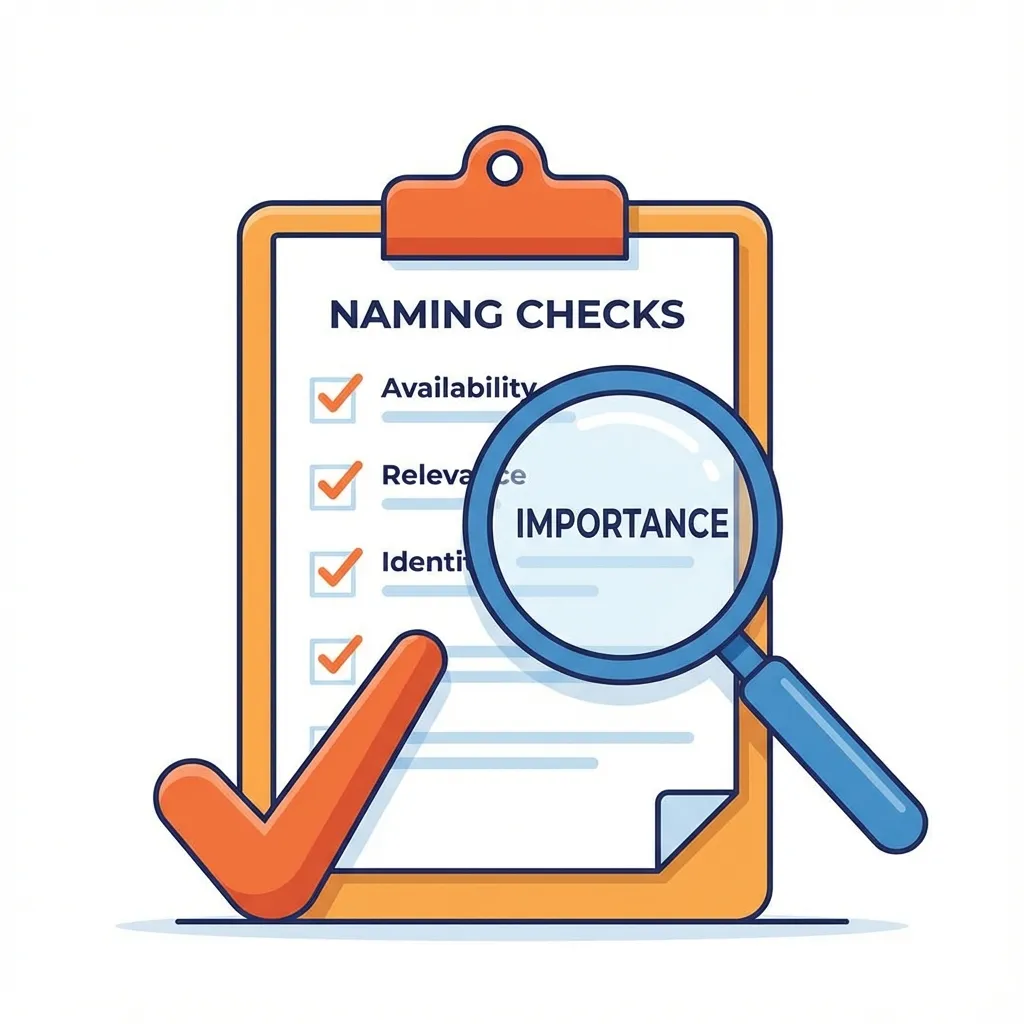
Choosing a name for your Private Limited Company Registration involves adhering to MCA regulations and avoiding trademark conflicts. Follow the practical steps and checks below to pick an appropriate, compliant, and future-ready name.

Brainstorm Naming
Steps to Decide on a Company Name
  • Brainstorm and Create a List Come up with several potential names that are unique, relevant, and easy to remember.
  • Check MCA Guidelines Ensure the name complies with MCA naming rules:
    1. Not identical or too similar to existing company/LLP names.
    2. Avoid offensive or undesirable words.
    3. Optionally reflect the company's business activity.
  • Conduct an MCA Name Search Use the MCA Name Search Tool to quickly check availability for each candidate name.
  • Trademark Search Verify the name against the Trademark Registry to avoid infringement and future disputes.
  • Reserve Your Company Name When a name is clear, reserve it via the RUN form on the MCA portal.
  • Register the Name After approval, proceed with incorporation (SPICe+) to register the name formally.
Important Points to Consider
  • Uniqueness Your company name must be distinguishable from existing companies.
  • Relevance Prefer names that are relevant to your business activities and future direction.
  • Trademark Infringement Avoid names that collide with existing trademarks — always perform a trademark search.
  • Future Expansion Choose a name flexible enough to support new products, services, or markets down the line.
Naming Checklist

Tip: Keep 3–5 backup names ready before filing RUN. If a name is rejected, having alternates saves time and avoids rework.

Post-Incorporation Compliance

After completing Private Limited Company Registration, certain mandatory compliances must be fulfilled to ensure smooth operations, legal validity, and avoid penalties.

Open Company Bank Account

Open a current bank account in the company’s name using the Certificate of Incorporation, PAN, and other incorporation documents.

Appointment of Auditor

A statutory auditor must be appointed within 30 days of incorporation by filing Form ADT-1 with the Registrar of Companies.

Issue of Share Certificates

Share certificates must be issued to shareholders within 60 days from the date of incorporation as proof of ownership.

Maintain Statutory Registers

The company must maintain statutory registers including members, directors, charges, and share transfers as required under the Companies Act.

Commencement of Business

File Form INC-20A within 180 days of incorporation to declare commencement of business and confirm capital subscription.

Annual & Ongoing Compliances

File annual returns (AOC-4, MGT-7), conduct board meetings, maintain accounts, and comply with tax and GST requirements every year.

Tip: Maintaining a compliance calendar and professional support helps avoid late fees, penalties, and legal issues after incorporation.

Government Support & Schemes

Private Limited Companies are eligible for several government-backed initiatives and incentives that support business growth and innovation.

DPIIT Recognition (Startup India)

Private limited startups can seek DPIIT recognition to access benefits such as tax exemptions, faster patent processing, and preferential access to government tenders and funds.

MSME Schemes & Loans

Access priority sector lending, collateral-free loans, interest subsidies and protections under MSMED for eligible enterprises. Useful for working capital and growth financing.

Make in India & Digital India

Manufacturing, technology and innovation-focused companies can tap programs for funding, infrastructure support, market linkages and skill development under these initiatives.

Frequently Asked Questions

A Private Limited Company Registration is a legally registered business structure with limited liability, a separate legal identity, and restrictions on share transfers—ideal for startups and SMEs looking for credibility and investor trust.

Any two or more individuals (Indian citizens or foreign nationals) aged 18+ can register a company — with at least one Indian resident director.

Minimum 2 directors, maximum 15. At least one must be a resident of India (lived for 182+ days in the previous year).

There is no minimum capital requirement as per Companies Act, 2013.

Usually 7–10 working days depending on document verification and MCA approvals.

Yes, they can — provided at least one Indian resident director is appointed and FDI guidelines are followed.

Yes. A valid utility bill (not older than 2 months), rental agreement or ownership document + NOC is required.

DIN is a unique Director Identification Number. DSC is a Digital Signature used to sign and verify electronic MCA forms.

Mandatory only if turnover exceeds limits or company engages in inter-state supply.

Yes, unless your employment contract explicitly prohibits it.

Yes — through a special resolution + MCA approval + availability check.

Annual filings (MGT-7, AOC-4), board meetings, maintaining registers, and tax filing.

No. Registration is fully online using DSC and MCA portal forms.

Yes, by following MCA procedures and securing ROC approval.

Pvt Ltd has limited liability + separate legal identity. Sole proprietorship is unregistered, unlimited liability, and not separate from owner.
LOCATIONS

Company Registration in Different States

CITIES

Company Registration in Major Cities